
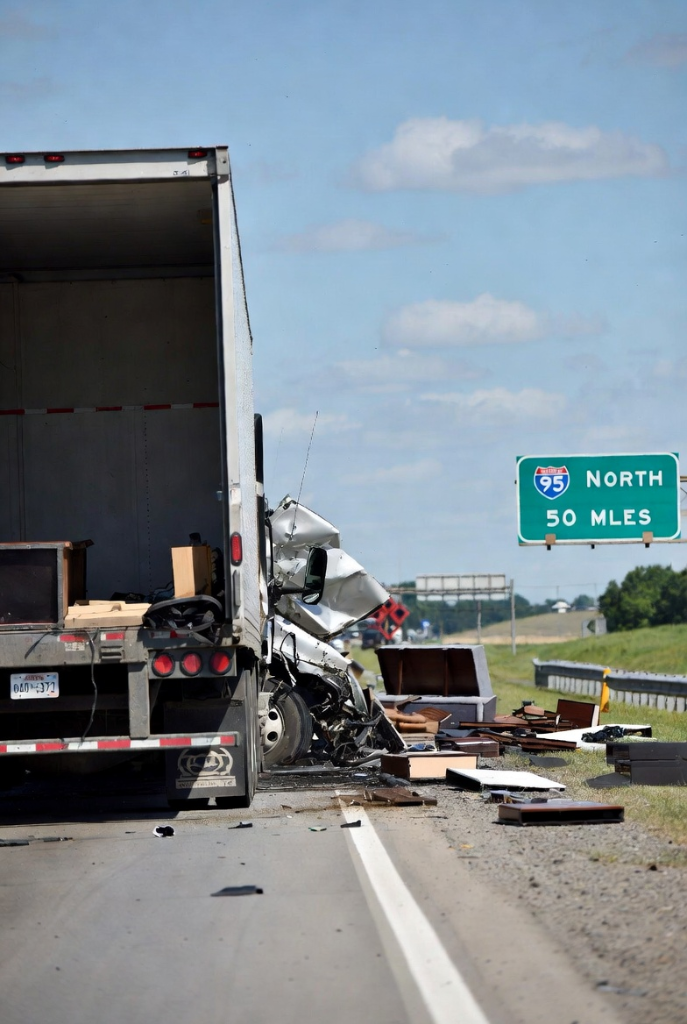
Assume the worst-case scenario: a driver picks up your load, their CDL is suspended, they're involved in an accident, and your freight is destroyed. Who pays?
The answer — frustratingly — is: it depends. And in many cases, coverage disputes mean nobody pays quickly, or nobody pays fully.
The Commercial Auto Policy
Most motor carriers are required to carry commercial auto liability insurance with minimum limits set by FMCSA — $750,000 for general freight, up to $5,000,000 for hazmat. This policy covers bodily injury and property damage to third parties when the insured vehicle is involved in an accident.
But here's where it gets complicated: if the driver was unauthorized to operate the vehicle, or was operating with a fraudulently obtained or suspended CDL, the insurer may argue an exclusion applies.
Insurers are in the business of risk. When they discover that a risk they didn't agree to cover was present — an unlicensed driver — they look hard at their exclusions.
Common Policy Exclusions That Come Into Play
- Unauthorized driver exclusions: Many policies exclude coverage when the vehicle is operated by someone not listed or not meeting minimum qualifications
- Fraud exclusions: If the driver or carrier obtained coverage by misrepresenting driver qualifications, the policy may be voidable
- Permissive use limitations: Coverage may only extend to drivers explicitly permitted by the carrier — and an unlicensed driver may not qualify
What About Cargo Insurance?
Cargo insurance covers the shipper's goods in transit. But cargo policies also contain exclusions — and an unlicensed driver operating a vehicle may trigger a clause related to improper operation or carrier negligence.
Even if a claim is ultimately paid, the shipper or broker may face:
- Lengthy claim investigations
- Reduced settlements based on comparative negligence
- Subrogation actions against the carrier — which may have no assets to collect from
The Broker's Exposure
Freight brokers who dispatch loads to carriers without adequate vetting face their own liability exposure. Courts have increasingly examined whether brokers had a duty to verify carrier safety and driver qualifications before tendering freight.
While brokers are not legally motor carriers, their role in selecting who hauls a load is coming under greater scrutiny in personal injury and cargo loss litigation.
Shipper Liability for Negligent Verification
Shippers themselves are not immune from liability when they fail to exercise reasonable care in verifying driver legitimacy. Courts in multiple jurisdictions have begun imposing a duty of reasonable diligence on shippers who knowingly or recklessly dispatch loads with carriers or drivers of questionable credentials.
The emerging legal theory: If a shipper can reasonably verify driver qualifications — and fails to do so — they may be held partially or wholly liable for losses when that unverified driver causes damage or commits fraud.
This is particularly acute in scenarios where:
- A shipper has direct knowledge that a carrier's vetting process is substandard or non-existent
- Red flags are present — unusual pricing, refusal to provide driver information, pressure to load quickly — but the shipper ignores them
- The shipper has access to verification tools (real-time CDL checks, SAFER database queries, fraud detection services) but chooses not to use them
- The loss could have been prevented by a simple, low-cost verification step
Courts reason: if you can easily verify but don't, you've effectively chosen to accept the risk. That choice may make you liable for the consequences.
Insurance implications: If a shipper's own negligence in failing to verify driver credentials contributes to a loss, their cargo insurance carrier may reduce or deny the claim based on breach of the policy's care and diligence clause. Some policies now explicitly require documented verification as a condition of coverage.
The Due Diligence Defense
The best protection for all parties is documented due diligence. Carriers that verify driver credentials in real-time, brokers that go beyond basic SAFER checks, and shippers that require verification as a condition of pickup — all build a defensible record that they took reasonable steps to ensure driver legitimacy.
In insurance disputes and litigation, that documented process matters enormously.
The Emerging Standard
The insurance industry itself is beginning to price risk based on verification practices. Carriers that use real-time driver verification tools, maintain clean MVR records, and can demonstrate proactive compliance may qualify for better rates — and have stronger footing when claims arise.
The message from the insurance world is becoming clear: if you can't prove who was driving, you may not be able to prove your claim.